Blog
Jewelry to Match Every Wedding Outfit Color

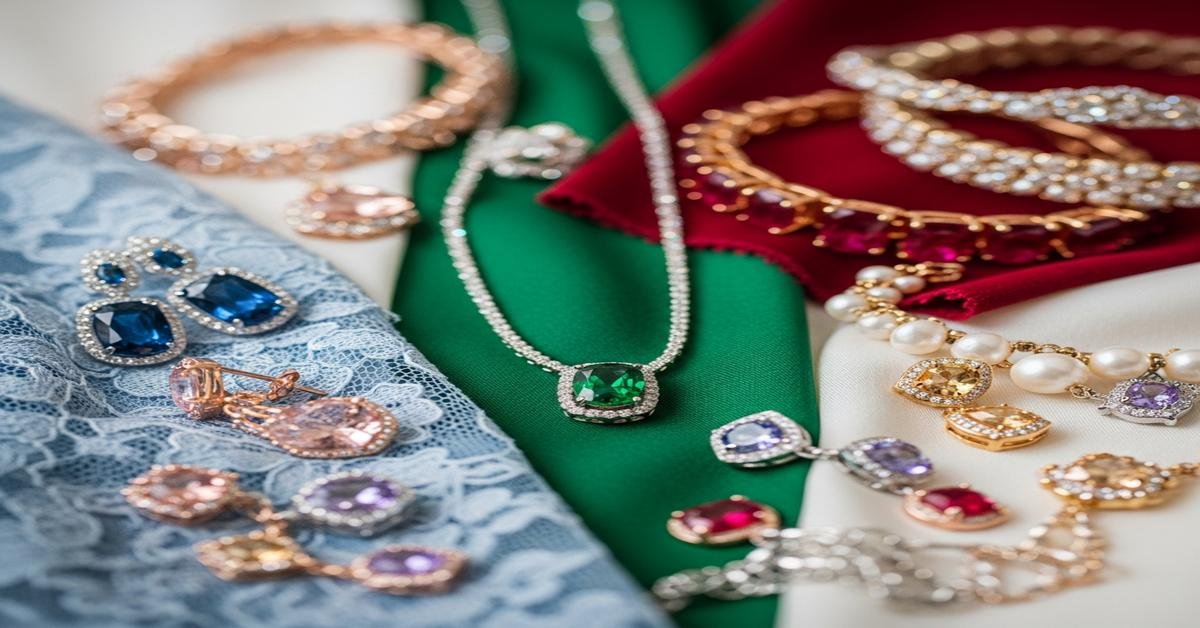
Choosing jewelry for a wedding outfit is about balance. The right piece highlights color, flatters your skin, and matches the event’s formality. Below are practical, color-by-color recommendations, with clear reasons and specific sizes, metals, and stone suggestions so you can shop or style with confidence.
How to think about color and jewelry
First, decide whether you want harmony or contrast. Harmony uses similar undertones (warm with warm, cool with cool). Contrast pairs opposites for impact. Also factor in formality and neckline. A day ceremony calls for smaller pieces. Evening calls for more sparkle. Finally, pick a dominant metal and stick to it for a cohesive look.
White, ivory, and cream
These neutrals are versatile. Choose metals and stones based on your skin’s undertone.
- Cool skin tones: platinum or 14k white gold with diamonds. Example: 0.25–0.50 ct diamond stud earrings (4.5–5.5 mm). A 16–18″ diamond pendant with a 0.10–0.25 ct center stays elegant.
- Warm tones: 18k yellow gold or 14k rose gold. Use pearls (Akoya 7.5–8.0 mm) or warm champagne diamonds. Why: the gold adds warmth against ivory without overpowering it.
- Formality tip: For traditional gowns, choose pearls or classic solitaire diamonds. For modern gowns, pick geometric gold or ear climbers (20–30 mm) for a contemporary edge.
Champagne, blush, and rosé
Soft pinks and beige look best with warm metals and muted stones.
- Choose 14k or 18k rose gold. The copper in the alloy (14k rose ≈ 58.3% Au + copper) echoes the dress tones.
- Stones: morganite (6–8 mm cushion or oval) or peach sapphires work well. Morganite at ~1.5–3 ct for a cocktail ring creates warmth without clashing.
- Neckline: a 16–18″ chain with a small 6×4 mm morganite pendant suits a sweetheart neckline. Longer 20–24″ pieces look better with V-necks.
Pastels (mint, lavender, baby blue)
Pastels are delicate. Keep jewelry light so it doesn’t compete.
- Metals: 14k white gold or 14k yellow gold depending on cool/warm cast of the pastel. Lavender pairs beautifully with rhodium-plated white gold to enhance coolness.
- Stones: tiny colored sapphires or tourmalines (3–5 mm) set in halo settings. Example: 5 mm mint sapphire studs with a 0.10–0.25 ct diamond halo.
- Style: delicate bracelets 2–3 mm wide. Avoid large, chunky pieces that overwhelm the soft color.
Brights (fuchsia, cobalt, coral)
Bright colors need jewelry that either neutralizes or matches their energy.
- Contrast option: Use neutral diamonds and white metals to tone down the look. Example: 0.50–1.00 ct total diamond drop earrings (25–35 mm) for evening.
- Match option: Pick colored stones that echo the dress—sapphire for cobalt (6×4 mm oval), ruby for fuchsia (5×3 mm pear).
- Keep proportions in mind: high-impact dresses suit statement necklaces only if the neckline is simple. Otherwise, pick earrings and a single ring.
Jewel tones (emerald, sapphire, amethyst, deep ruby)
Deep colors call for rich metals and bold stones.
- Metals: 18k yellow gold or platinum. Yellow gold enhances emeralds and rubies; platinum sharpens sapphires and amethysts.
- Stone sizes: 1.5–3.0 ct center for rings or pendants makes a visible but elegant statement. For earrings, 6–8 mm drops balance well with embellished gowns.
- Why this works: deep colors absorb light. Larger, saturated stones and high-polish metals reflect more, restoring visual balance.
Black and navy
Dark neutrals are the most forgiving. You can either glam up or keep it minimalist.
- Formal evening: choose diamonds and platinum for high contrast. A 1.0 ct tennis bracelet or a cluster of 0.75–1.5 ct total diamond studs reads formal and polished.
- Modern look: mixed metals like a 14k rose gold choker with small black spinel accents for an unexpected twist.
- Consider length: dramatic earrings (40–70 mm chandelier) work well with strapless black gowns and updos.
Metallic dresses and sequins
Metallic fabrics need careful matching to avoid clashing tones.
- Match the metal: yellow-gold sequins with 18k yellow gold jewelry; silver sequins with platinum or white gold.
- Keep stones minimal: small diamonds or plain polished metal pieces work best. Too many colored gems compete with the shimmer.
- Scale: if the dress is heavily sequined, choose a single focal piece—studs or a sleek cuff (6–8 mm) rather than a necklace plus earrings.
Prints and multi-colored outfits
Printed dresses benefit from picking one color from the print and matching it in jewelry.
- Extract a dominant hue and choose a stone in that color. For example, a floral dress with navy and coral calls for navy sapphires in small studs.
- Alternatively, neutralize with pearls or diamonds to avoid competing with the print.
- Mixing metals works here if the print includes multiple metallic tones, but limit to two metals maximum.
Bridesmaids and groomsmen coordination
For a unified look, give bridesmaids the same metal and stone palette but allow different styles.
- Example: blush dresses + rose gold. Give each maid a rose gold pendant (morganite 6×4 mm) but let them choose hoops, studs, or a lariat necklace based on their neckline.
- For groomsmen, choose cufflinks and tie bars that reflect the bridal party metal. Use 14k gold-plated or rhodium-plated options to fit budgets.
Practical sizing and care notes
Specific sizes and compositions help you shop wisely.
- Earrings: studs 4–8 mm (0.10–0.50 ct) for daytime; drops 25–70 mm for evening. Long earrings suit updos.
- Necklaces: choker 14–16″, princess 16–18″, matinee 20–24″. Pick length by neckline.
- Rings: center stones 0.5–3.0 ct depending on style and hand size. Consider a 2 mm comfort fit band for wedding sets.
- Metals: 14k gold ≈ 58.3% gold (durable for everyday wear), 18k ≈ 75% (richer color but softer). Platinum 950 is hypoallergenic and dense—good for heavy settings.
- Care: high-polish metals and stones need a soft brush and mild soap. Pearls and opals should avoid ultrasonic cleaners and harsh chemicals.
Quick checklist before you leave the house
- Match metal undertone to dress undertone or pick contrast intentionally.
- Balance scale: simple dress = statement jewelry; busy dress = minimal jewelry.
- Confirm necklace length against neckline and earring length against hairstyle.
- Limit to two metals and two focal stones to keep the look cohesive.
Choosing jewelry for a wedding outfit becomes easier when you think in terms of undertone, scale, and formality. Use the specific sizes and metal notes above to refine choices. With these guidelines, you’ll pick pieces that complement color, flatter the wearer, and photograph well.