Blog
Bold Statement Rings That Rule This Season

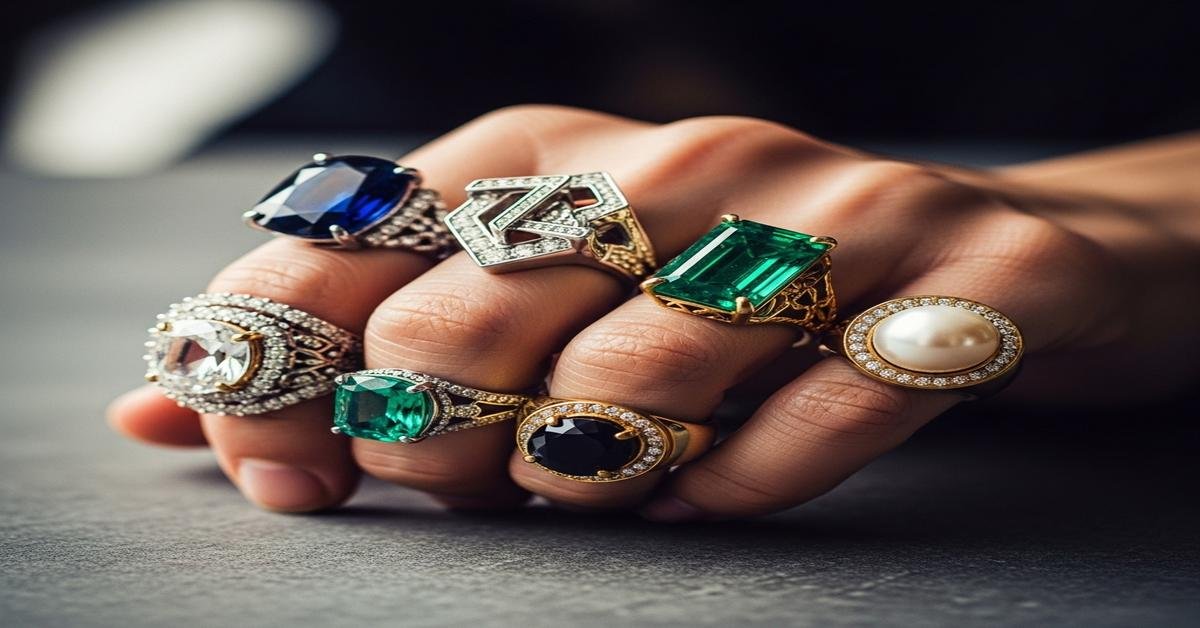
Bold Statement Rings That Rule This Season — statement rings are about scale, personality, and proportion. They stop conversation and complete outfits. This season favors sculptural silhouettes, mixed metals, and large colored stones that read as jewelry rather than accessories. Below I explain the styles, the technical details you need to know, how to size and style these pieces, and how to care for them so they last.
What makes a ring a “statement” ring?
A statement ring is larger in visual presence than a typical engagement or stack ring. That presence comes from one or more of these factors:
- Scale: wider shanks (6–12 mm) or large top elements (stones 8–12 mm across or more).
- Mass and height: raised settings, domed surfaces, or multi-layer construction that sit above the finger.
- Design language: bold geometry, sculptural curves, oversized signet plates, or vivid color contrasts.
Why it matters: scale changes how a ring interacts with your hand. Larger profiles draw attention to the finger, so balance with your hand size and other jewelry.
Trends ruling the season — and why
- Sculptural metalwork: thick, organic bands and 3D shapes. These feel modern and wearable because they don’t rely on delicate stones that require constant care.
- Oversized signet and seal rings: classic form, updated with angular cuts or enamel. Signets read as unisex and pair well with minimal wardrobes.
- Large colored stones: emerald cuts, cushion-cut sapphires, Paraíba-like tourmalines, and spinels in 2–6 ct range. Color gives instant personality without needing extreme clarity.
- Mixed metals and enamel: contrasts like a 14k rose gold bezel with a white gold shank, or bright enamel pockets, create visual depth at a lower cost than larger stones.
- Lab-grown diamonds and ethically sourced stones: these offer larger visual size per budget. Lab diamonds have the same optical properties as mined stones and let buyers prioritize size or color.
Materials and technical details to watch
Gold alloy and karat: 14k gold is about 58.3% gold and more durable for everyday statement rings. 18k is 75% gold, richer in color but softer. Rose gold contains copper; an 18k rose alloy is usually 75% gold + ~22–23% copper + small silver — copper adds strength but darkens over time.
Platinum: typically Pt 95% (marked Pt950). It’s dense and hypoallergenic. It wears slower but develops a patina and is heavier on the finger.
White gold plating: most white gold is rhodium-plated. The plating creates a bright finish but wears off and needs re-plating every 1–2 years with regular wear.
Stone sizes and visual cues: round diamond diameter: 6.5 mm ≈ 1 ct, 8.0 mm ≈ 2 ct, 10.0 mm ≈ 4 ct. Oval and emerald cuts show larger face-up area for the same carat weight. For colored gems, a 10 x 8 mm oval is commonly ~3 ct and reads large without huge cost increases.
Settings: pros and cons for everyday wear
- Bezel: metal surrounds the stone. Highly protective and modern-looking. Slightly reduces brilliance but is durable for daily wear.
- Prong: shows more light and brilliance. Needs regular prong checks and possible re-tipping to prevent loss.
- Pavé: adds surface sparkle. Small stones require more maintenance; dirt hides easily in pavé and prongs can loosen.
- Tension and flush: sleek but require exact sizing and expert repair if damaged.
Sizing, fit, and comfort — practical rules
Statement rings feel different from slim bands. Wider bands and high profiles change fit and comfort.
- Wide bands add size: a 6–8 mm band typically increases ring feel by about ¼–½ size. Bands 10 mm or wider can add up to a full size. Why: more metal contacts the finger, reducing flex.
- High-set rings: measure knuckle clearance. If your knuckle is significantly larger than your base finger, choose lower profiles or a tapered shank to slide on and off more easily.
- Try before you buy: always test a statement ring for several minutes. Walk around, wash hands, and bend your finger. Some pieces move or pinch only with activity.
- Hollow construction: many designers hollow the inside of large tops to reduce weight without losing the look. This keeps comfort high while maintaining scale.
How to wear a statement ring
Balance is key. A single bold ring can anchor an outfit. Here are practical pairings:
- Daytime: pair a chunky signet or sculptural band with slim stack rings on the other hand. Keep bracelets minimal to avoid competing focal points.
- Evening: let the ring do the work. Wear streamlined earrings and a simple necklace so the ring remains the focal point.
- Stacking: use a wide ring as the center and add thin bands above or below to soften the look. Avoid more than two slim bands adjacent to a very wide band — it can look crowded.
- Mix metals: deliberate contrast—rose gold ring with a white gold bracelet—creates modern interest. Match finishes (all matte or all high polish) to keep cohesion.
Care and buying checklist
- Ask about metal composition: confirm 14k vs 18k, platinum grade (Pt900 vs Pt950), and whether white gold is rhodium-plated.
- For diamonds, request a grading report (GIA or AGS) if size or clarity is a major part of the purchase decision.
- For colored stones, ask about treatments (heat-treated sapphire, oil-filled emerald) and origin when relevant; treatments affect durability and value.
- Inspect the inner band for comfort finishing. A slightly rounded inner profile (comfort-fit) helps with big rings.
- Plan for maintenance: prong checks, rhodium re-plating, and professional cleaning. Factor those costs into ownership.
- Consider budget tiers: under $500 for fashion or sterling pieces; $1,000–5,000 for solid gold with modest stones; $5,000+ for designer pieces or larger natural gemstones/diamonds.
Statement rings make a clear visual claim. Choose one with proportion in mind, know the materials and settings, and plan for wear and upkeep. A well-chosen bold ring will look intentional and feel effortless, season after season.