Blog
Bridal Earrings That Make the Perfect Statement

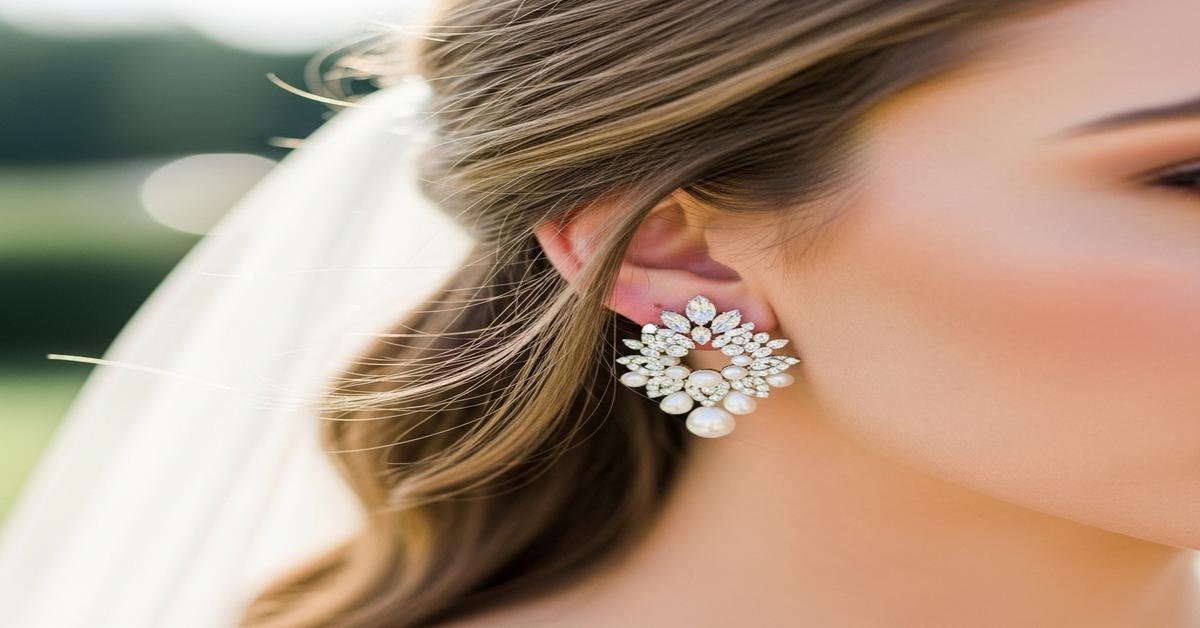
Choosing bridal earrings is a mix of style and practical planning. The right pair finishes your look and photographs well. But “statement” doesn’t always mean huge or heavy. It means clarity of intent: bold color, distinct shape, strong scale, or meaningful detail that reads from a distance. Below I explain how to choose statement bridal earrings that flatter your face, suit your gown, and survive the day.
How to choose by face shape, hair, and neckline
Fit the earring to the frame it will sit in. Matching scale matters more than following trends.
- Face shape: For round faces, choose long drops or vertical lines to elongate the face (40–60 mm). For square faces, soft curves or teardrops soften angles. For heart shapes, balance a narrow chin with medium-width chandeliers (30–50 mm). Oval faces are versatile; keep proportion rather than length extremes.
- Hair and veil: If you wear hair up, you can go bold—long chandeliers or shoulder-dusters (50–75 mm). For hair down, choose compact studs or short drops (10–30 mm) so earrings don’t tangle. With a cathedral veil, avoid pieces that compete with lace or beading; pick simpler silhouettes or single-stone drops (12–25 mm).
- Neckline pairing: Strapless gowns pair well with big drops or statement hoops. High-neck or embellished necklines need smaller earrings or studs to avoid visual overload. V-necks look great with teardrops that echo the line.
Styles that make a true statement
Statement doesn’t mean one-size-fits-all. Below are practical style choices and how they read on camera and in person.
- Studs with presence — Large solitaire diamonds or gemstones, 0.50–1.50 ct per earring (0.5 ct = ~5 mm round; 1.0 ct = ~6.5 mm). These read as bold, clean, and classic. Use screw-backs or secure friction backs for a wedding day.
- Short drops — 12–30 mm length. Good balance for semi-up hair. Often use a center stone (0.10–0.50 ct) with accent melee diamonds for sparkle without excess weight.
- Chandeliers and cascades — 40–75 mm. Ideal for dramatic evening receptions or simple gowns. Look for articulated links to move and catch light. Check weight: keep under ~10–12 grams per earring to avoid earlobe strain.
- Hoops and sculptural shapes — Medium (25–40 mm) sculptural hoops give a modern statement. Solid or pavé-set diamonds give different effects: solid metal reads bold and graphic; pavé reads glittery and refined.
- Pearls with a twist — Classic 7–10 mm white pearls are timeless. For a statement, choose larger 10–12 mm pearls or pearls paired with diamonds in drops. Be cautious: pearls are softer (Mohs ~2.5) and need careful handling.
- Colored gemstones — Sapphires and rubies (hardness ~9) are durable statement stones. Emeralds are visually rich but often softer and included; they require more care. A 6–8 mm sapphire or ruby center will read boldly.
- Mismatched or ear stack — One long drop paired with a short stud can look contemporary. If you plan multiple piercings, stagger lengths and textures for intentional contrast.
Metals, alloys, and gemstone choices
What the earrings are made of affects durability, price, and skin reaction.
- Gold alloy: 14k gold is ~58.3% pure gold and mixed with stronger metals. It’s harder and better for prongs and everyday wear. 18k gold is ~75% pure and richer in tone but softer—better for pieces with fewer structural demands.
- Platinum: Usually ~95% Pt for jewelry. Extremely durable and hypoallergenic. It’s heavier and holds prongs well, which is why high-value diamond studs often use platinum settings.
- Sterling silver: 92.5% Ag. Affordable but softer and prone to tarnish; not ideal for high-value stones or delicate prongs unless reinforced.
- Rhodium plating: White gold is commonly rhodium-plated to enhance whiteness. Expect re-plating every 1–3 years depending on wear; plating thickness and wear pattern determine frequency.
- Diamonds vs lab-grown: Visual and physical properties are the same for most consumers. Choose certified stones (GIA, AGS, or equivalent lab reports) when size or value exceeds $1,000. For smaller accent stones, clarity and color tolerances can be relaxed to save budget.
Construction, comfort, and technical details
Small technical specs make a big difference on the wedding day. Check them before you buy or lease.
- Post thickness: 0.9–1.0 mm posts are standard for durability. Thin posts bend more easily. For heavier earrings, look for reinforced posts soldered to the body.
- Backings: Friction backs are common for light studs. For higher value or heavier pieces, opt for screw-backs or locking backs. Long drops sometimes use lever-backs or omega backs for stability.
- Weight: Measure in grams. Under ~6–8 g per earring is comfortable for most; 8–15 g feels noticeable but manageable for short events. Over 15 g risks stretching lobes unless earlobe support or spine is used.
- Articulation: Multiple joints allow movement and sparkle. Look for solid soldered links rather than glued elements. That prevents failure if you dance or veer into a bouquet toss.
- Non-pierced options: High-quality clip-ons and screw-backs distribute pressure with a larger surface pad to avoid pain. Try them for at least 10–15 minutes to judge comfort.
Care, budget, and buying practicalities
Plan beyond “I love them.” Think maintenance, insurance, and how they travel.
- Budgeting: Decide if earrings are an investment piece. Diamond studs of 1.0 ct total (0.5 ct each) commonly start at a few thousand dollars depending on color/clarity. Statement chandeliers with multiple carats and platinum settings can reach much higher. Set a cap and prioritize where cost should go—stone size, quality, or craftsmanship.
- Care: Ultrasonic cleaners are fine for diamonds, sapphires, and rubies. Do not use ultrasonics on pearls, opals, or fragile emeralds. Wipe pearls with a soft cloth after wearing to remove oils. Store earrings flat so posts don’t bend.
- Insurance and appraisal: For items over ~$1,000, get a current written appraisal and photograph for insurance. Many jewelers provide short-term rental or loaner pieces with insurance options if you prefer not to buy.
- Repairs and re-plating: Ask about rhodium re-plate cost and expected timeline. Confirm the jeweler can shorten/lengthen drops or replace stones in case of damage after the wedding.
Pick a statement earring that matches your face, hair, and gown. Balance boldness with comfort and construction. When in doubt, try candidates on with your veil and hairstyle. The right pair should feel secure, flatter your features, and make the photos sing—without distracting from the vows.