Blog
Bridal Jewelry Essentials for Every Bride-to-Be

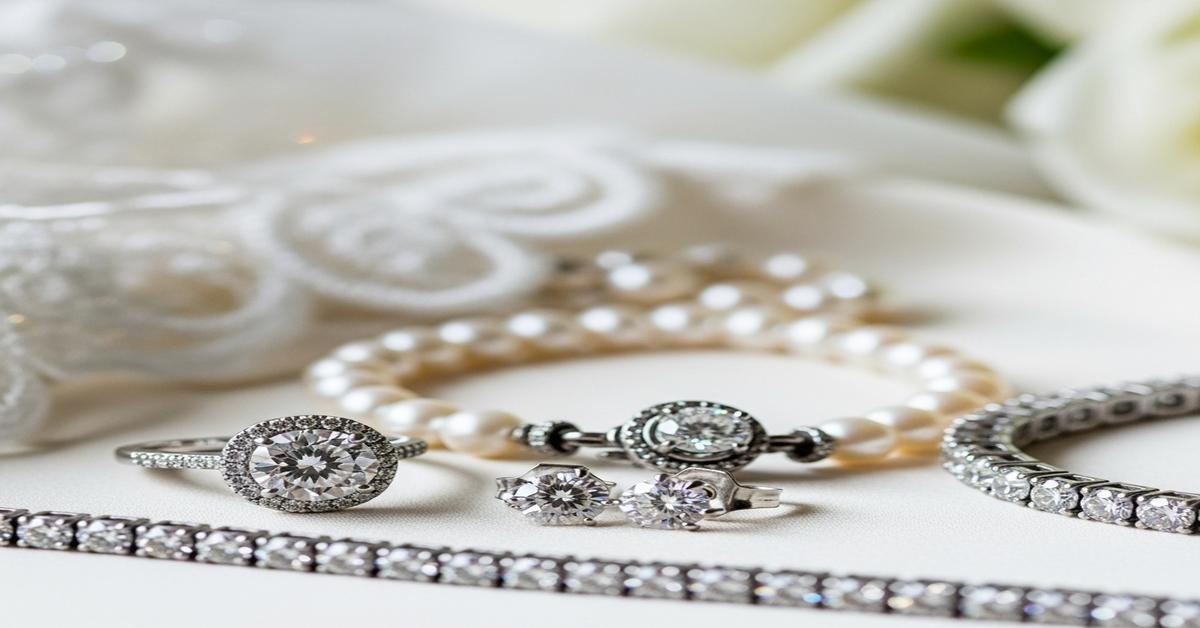
Choosing bridal jewelry is more than picking pretty pieces. These items will be worn every day, photographed for decades, and should match your lifestyle, skin tone, and wedding style. Below are the practical essentials every bride-to-be should know: what to buy, how to size and pair pieces, metal and stone choices, timelines, and care tips. I explain the reasons behind each recommendation so you can make confident choices.
Engagement ring: the core piece
The engagement ring sets the aesthetic and practical baseline for the rest of your bridal jewelry. Decide first on shape and setting because those determine comfort and matching wedding bands.
- Stone size and scale: A round brilliant 1.0 ct diamond is about 6.5 mm across. A 0.5 ct is ~5.1 mm. Pick a size that balances finger size: larger stones look best on wider hands; smaller stones suit slender fingers. Why: the stone diameter determines visual impact and how wide a band you can stack beside it.
- Setting type: Solitaire and prong settings (4–6 prongs) show more stone and higher sparkle. Halo and pavé add apparent size with small stones. Bezel and low-profile settings are safer for active lifestyles because they catch less and protect the stone. Why: setting affects wearability and maintenance (pavé needs more care to avoid losing small stones).
- Diamond quality: Cut matters most for sparkle. For round brilliants, choose a good to excellent cut grade. Color in the H–I range and clarity VS2–SI1 often look eye-clean at a better price. Why: you retain brightness while saving budget on invisible characteristics.
- Metal: Common alloys: 14K gold (58.5% gold, stamped 585), 18K gold (75% gold, stamped 750), and platinum 950 (95% Pt). Platinum is denser and wears down less, great for prongs. 14K is more durable for live-everyday wear. White gold needs rhodium plating every 1–2 years to stay bright white.
Wedding bands: form meets function
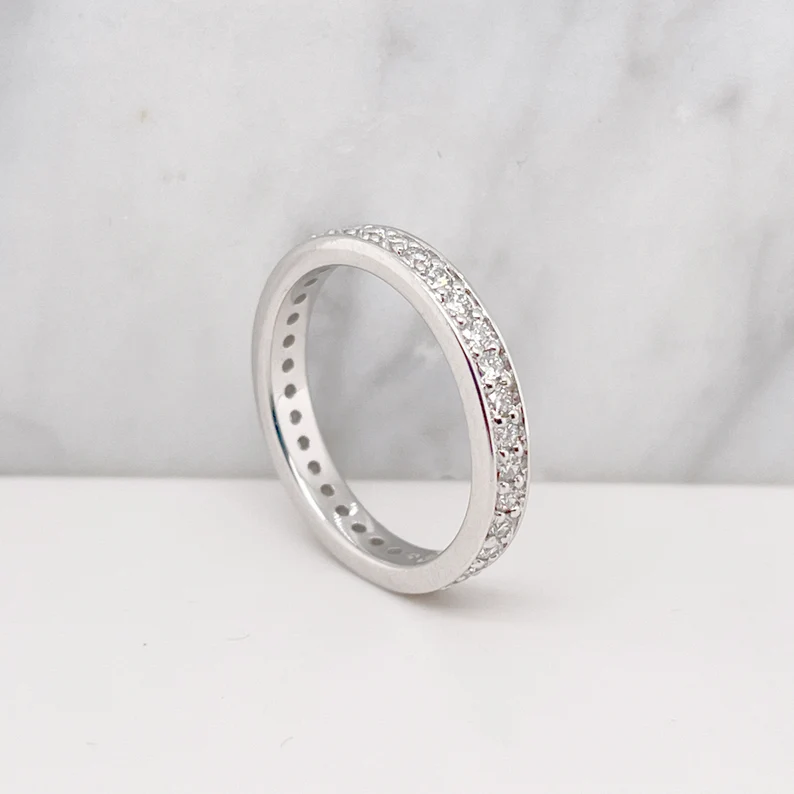
Your wedding band should complement the engagement ring physically and visually. Think of two questions: will the band sit flush, and do you want a match or contrast?
- Widths and proportions: Typical engagement ring shanks are 1.8–2.5 mm. A matching wedding band is often 1.8–3.0 mm. If your engagement center is 6.5 mm (1 ct), a 2–3 mm band keeps balance. Why: a too-narrow band can look lost; a too-wide band can overshadow the center stone.
- Profile and comfort: Comfort-fit interiors are slightly domed and better for daily wear. Consider 1.8–2.5 mm thickness for durability without bulk.
- Stacking and contour: If your engagement ring has a low halo or large profile, choose a contoured band that hugs the setting. Flat bands sit better with flat-shank rings. Why: contouring prevents gaps where dirt collects and keeps the rings stable on the finger.
- Metal mixing: Mixing metals is fine if the tones coordinate. For example, a platinum solitaire looks crisp with a thin yellow gold band if an accent (like milgrain or a small yellow gold detail) ties them together. Why: mixing lets you keep the metal that best protects the center stone while reflecting personal style.
Earrings, necklace, and bracelet: finishing pieces
Choose pieces that support—never compete with—the engagement ring at the eye line and in photos.
- Earrings: Diamond studs are the classic. Sizes: 4 mm studs ~0.25 ct each, 6.5 mm ~1.0 ct each. Choose studs for a timeless look. Drop earrings work for formal gowns but can compete with necklines. Why: studs frame the face without drawing attention away from your ring shots.
- Necklace: Common lengths: 16″ (choker), 18″ (standard), 20″+ (longer). A single pendant with a 0.25–0.50 ct center stone sits well at 18″. Match the pendant metal to your ring metal for cohesion. Why: necklace length should complement the dress neckline and not compete with bodice details.
- Bracelet: A tennis bracelet with 2–3 mm diamonds or a slim chain bracelet pairs well with a ring. Avoid chunky cuffs that hide the wrist and draw focus away from rings in candid photos.
Gemstone alternatives and durability
If you prefer color or cost savings, know the hardness and care differences.
- Sapphires: Mohs 9. Durable for everyday wear. Good for halos and colored centers.
- Moissanite: Mohs ~9.25, high brilliance, lower cost than diamonds. It has a different fire and is good for budget-minded brides who want sparkle and hardness.
- Opal, emerald: Softer or cleavage-prone (emerald), these need protective settings and careful wear. Not ideal for everyday rings unless set in protective bezels.
Sizing, timeline, and practical notes
Plan ahead and base decisions on facts, not pressure.
- Timing: Off-the-shelf rings: allow 2–4 weeks for sizing and shipping. Custom work: plan 8–12 weeks plus 1–3 weeks for resizing/engraving. Why: manufacturing and stone sourcing take time; last-minute rushes raise costs and limit choices.
- Resizing: Commonly possible ±2 sizes for gold and platinum. Alternative metals like tungsten and some titanium alloys are difficult or impossible to resize. Choose metals and initial size accordingly.
- Engraving space: Narrow bands under 2.5 mm limit engraving to one or two initials. Wider bands allow longer messages. Why: be realistic about what fits legibly.
- Budgeting: Put the largest portion of budget into the engagement ring if that’s your priority. Still allocate for a quality wedding band, necklace or studs, and insurance/appraisal costs.
Care, maintenance, and insurance
Protect your pieces with simple habits and coverage.
- Cleaning: Diamonds and hard stones can be cleaned in warm soapy water and a soft brush. Ultrasonic cleaners are fine for diamonds but avoid them for fragile gemstones (opal, emerald).
- Rhodium plating: White gold needs re-plating every 1–2 years depending on wear. Platinum does not need plating but can develop a patina; polishing restores shine.
- Checks: Inspect prongs annually. Loose settings are the most common cause of lost stones.
- Insurance: Get an itemized appraisal with replacement value and photos. Add jewelry to homeowner’s policy or take a standalone policy. Why: sentimental and replacement value can be high; insurance reduces financial risk.
Final practical tip: try full sets on together—ring, band, earrings, necklace—under real light and in photographs. That confirms balance, scale, and color match. With the right choices, your bridal jewelry will look cohesive, feel comfortable, and stand up to daily life for years to come.