Blog
Chains and Charms: The Cool-Girl Look

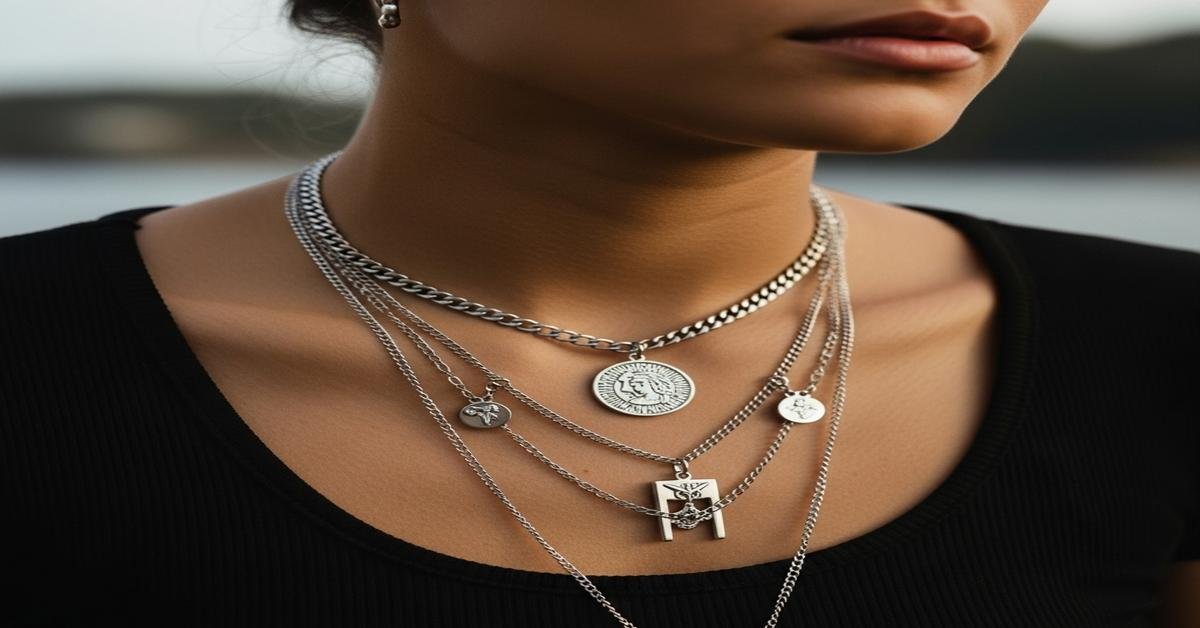
The “cool-girl” jewelry look centers on easy, personal layering: simple chains paired with meaningful charms. Done well, it reads modern and effortless. Done poorly, it looks cluttered or fragile. This guide explains the practical choices — chain styles, metal choices, charm size, and everyday care — so you can build a collection that lasts and actually looks intentional.
Choose the right chain style and thickness
Chain style affects both look and durability. Pick based on how you will wear it and what you will hang on it.
- Cable (trace) chain: Simple oval links. Good for delicate charms. Use 0.8–1.5 mm for tiny charms and 1.8–2.5 mm for everyday wear. Why: oval links resist twisting and are easy to repair.
- Curb & Figaro: Flat, interlocking links. Use 1.5–4 mm for a casual, slightly bold look. Why: the flat profile sits nicely against skin and handles weight well.
- Box chain: Square links with a geometric look. Use 1.2–3 mm. Why: smooth, strong, and less likely to snag — good for pendants with narrow bails.
- Rope & Twist: Textured and reflective. Use 2–4 mm for drama. Why: visual weight without needing a heavy pendant.
- Snake & Herringbone: Sleek, smooth ribbons. Use caution: these kink easily. Best for charm-less statement pieces or very light pendants.
Match chain length to neckline and vibe
Length changes the whole effect. Choose lengths based on outfit and layering plan.
- Choker (14–16 in / 35–40 cm): Close to the neck. Use a small charm or none at all. Why: sits above collarbones and pairs well with V-necks and off-shoulder tops.
- Princess (18 in / 45 cm): Classic single necklace length. Works with most necklines and single pendants.
- Matinee (20–24 in / 50–60 cm): Slightly longer, casual. Use layered shorter chains above it for the cool-girl stacked look.
- Opera (28–36 in / 70–90 cm): Long and dressy. Good for single, larger charms or multiple knots for styling.
Pick metals and alloys with durability in mind
Metal matters for color, wear, and maintenance. Here are specific recommendations and why they matter.
- 14k gold (58.3% Au): Best balance of durability and color. Use for pieces worn daily. Why: harder than 18k, fewer scratches under regular wear.
- 18k gold (75% Au): Richer color, softer metal. Use for special pieces, not for heavy charm work. Why: softer alloys dent more easily.
- Gold-filled or vermeil: Thicker gold layer over base metal. Use if you want gold look on a budget. Why: gold-filled will last years with regular wear; vermeil is good but can wear if exposed to moisture and perfumes.
- Sterling silver (.925): Bright and affordable. Expect tarnish; polish periodically. Why: strong enough for everyday but will darken unless plated or cared for.
- Rhodium-plated white gold: Keeps a white finish. Re-plate every few years as needed. Why: the plating prevents yellowing but wears away over time.
Scale charms to chain and body
Proportion keeps the look modern. Mismatched scale looks heavy-handed or toy-like.
- Small chains (0.8–1.2 mm): pair with charms 5–12 mm or 1–3 grams. Why: tiny chains can’t support heavy beads without stretching.
- Medium chains (1.5–2.5 mm): ideal for charms 10–20 mm or 3–8 grams. Why: balanced visual weight and durability for daily wear.
- Thick chains (3–5+ mm): can carry larger charms or multiple charms totaling 10+ grams. Why: thicker links distribute weight and reduce breakage risk.
Also check the bail (the hole on the charm). If your chain is 2 mm, the bail should be at least 2.5–3 mm to slide freely. If not, choose a necklace with a jump ring or a pendant that threads on.
Design choices that read “cool-girl”
The cool-girl aesthetic favors intentional asymmetry, negative space, and mixed metals. Here are practical ways to achieve it.
- Layer selectively: Start with a solid mid-length chain (18 in), add a shorter delicate chain (14–16 in), and a longer pendant (24 in). Why: even spacing keeps each piece visible and prevents tangles.
- Mix textures and metals: Pair a polished gold curb with a silver box chain and a small enamel charm. Why: contrast keeps the look modern and avoids matchy-matchy kitsch.
- Play with scale: Combine one medium charm (12–18 mm) with two tiny pendants (6–10 mm). Why: eye moves naturally; one focal charm grounds the set.
- Choose low-profile settings: Bezel or flush-set stones sit tight to metal and snag less than prongs. Why: charms are touched a lot; low settings survive daily wear.
- Personalize sparingly: One engraved disc (8–14 mm) or a single initial keeps the look curated. Why: too many personal pieces becomes cluttered.
Practical care and durability tips
Small choices keep pieces looking new and stop breakage.
- Use soldered jump rings: Unsoldered rings open under strain. Why: soldered rings prevent lost charms.
- Choose a lobster clasp for daily wear: More secure than spring rings. Use a safety chain if the charm is valuable. Why: reduces accidental drops.
- Limit exposure to chemicals: Remove jewelry for pools, hot tubs, and heavy cleaning. Why: chlorine, cosmetics, and perfumes accelerate plating loss and tarnish.
- Store properly: Hang necklaces or lay flat with each chain separated. Why: prevents tangles and kinks — snake and herringbone especially dislike bends.
- Clean gently: Soft brush, mild soap, and quick dry. For plated items, wipe with a soft cloth only. Why: abrasive cleaners remove plating and scratch soft gold.
Final practical plan
If you want a reliable cool-girl capsule, buy one good mid-length 14k gold chain (1.8–2 mm, 18 in), one delicate short chain (1 mm, 14–16 in) and three charms: a small initial disc, a medium-sized bezel charm with a stone, and one textured geometric or enamel piece. That combination gives you mix-and-match options. Invest in soldered rings and a lobster clasp. Build slowly; quality makes layering look natural, not accidental.