Blog
Diamond vs Polki: Best Choice for Brides

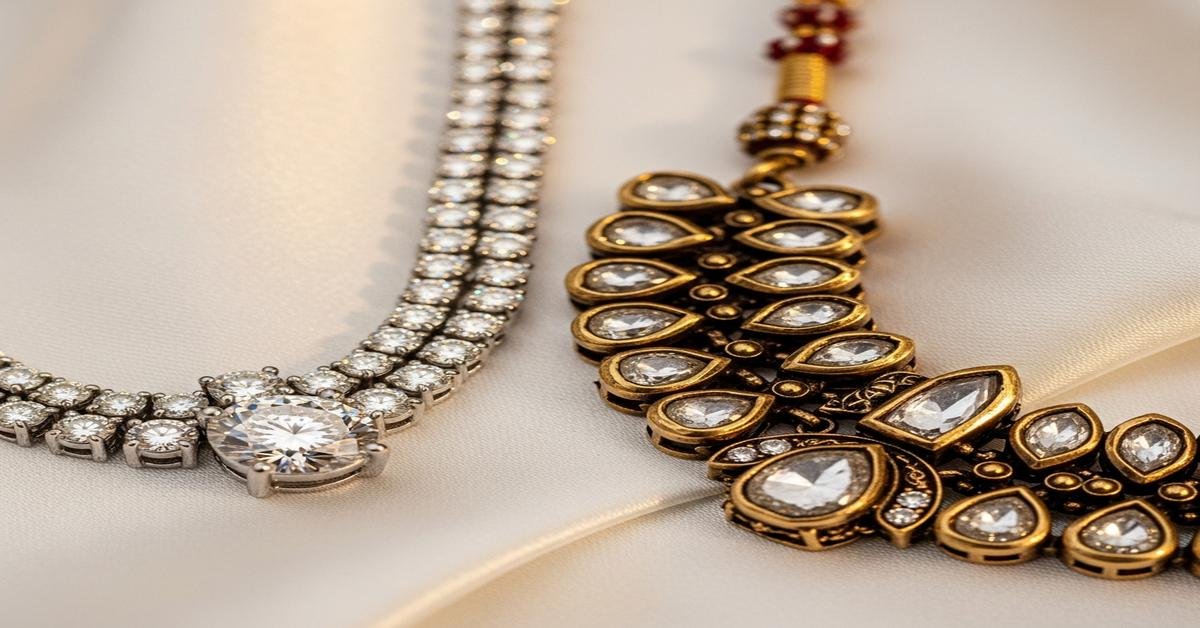
Choosing between a modern cut diamond and a traditional polki piece is one of the biggest aesthetic and practical decisions a bride makes. Both are real diamonds, but they behave, look, cost, and age very differently. Below I compare the two across the factors that matter most for brides: appearance, durability, settings and metal choices, maintenance, certification and resale, cost, and sensible combinations for bridal wardrobes. I explain the “why” so you can match the choice to the way you live and the look you want.
What is the difference — technically and visually
Modern cut diamond: A diamond cut to optimize brilliance and fire. Typical cuts are round brilliant, princess, oval, and cushion. Cut, color, clarity and carat (the 4Cs) determine value. A 1.00 ct round brilliant measures about 6.5 mm. Modern cuts use precise facet geometry to return light to the eye. That’s why they sparkle intensely.
Polki: Uncut or minimally cut natural diamond. Polki stones are flat, irregular, and thin. They are not faceted like modern diamonds, so they do not produce the same bright, scintillating sparkle. Instead they give a soft, antique shimmer and larger visual surface per carat because they are shallower. Polki is traditionally set in 22k gold with kundan or meenakari techniques.
How they wear day-to-day
Durability: Both are diamond material (Mohs hardness 10), so the substance is hard. But polki stones are thin with raw edges and can chip more easily at the rim. Modern-cut diamonds have stronger overall geometry and sit safely in secure settings.
Daily wear: For an engagement ring worn every day, a modern cut in a protective setting (e.g., bezel or four- or six-prong with good crown height) is the safer choice. Choose 14k or 18k gold for rings: 14k is ≈58.3% gold and harder (better for everyday use); 18k is ≈75% gold and softer but richer in tone. White gold should be rhodium-plated; replate every 1–2 years to keep the white finish.
Occasional / ceremonial wear: Polki is ideal for bridal sets and big ceremonial pieces. Necklaces, matha patti, chandbali and statement earrings are common polki uses. These are usually worn for hours at a time, not daily, which suits polki’s fragility and traditional style.
Settings and metal choices
- Polki settings: Most often mounted in 22k gold (≈91.7% gold) using kundan technique or a closed-back setting with foil or lac to enhance brightness. 22k gold is soft and yields that warm yellow backdrop traditional bridal jewelry needs.
- Diamond engagement rings: Best in 14k or 18k gold or platinum. Platinum is dense and hypoallergenic; ideal for prong and platinum basket settings. For daily wear, 14k offers better scratch resistance.
- Protective details: For larger polki stones ask for secure bezel or high-corner prongs and a good protective structure. For diamonds, a low-profile setting reduces catch and protects the crown.
Light performance and appearance — why they look different
Cut matters. Modern-cut diamonds are faceted to maximize internal reflection; they return a lot of white light (brilliance) and color flashes (fire). Polki is essentially a natural table with few facets. It shows a softer, vintage gleam and reflects a broader, less intense light. If you want the classic engagement-ring “sparkle” choose a modern cut. If you want a regal, antique look choose polki.
Certification, provenance, and resale
Certification: Modern diamonds are commonly certified (GIA, IGI, AGS). Certification documents cut grade, color, clarity and carat weight—essential for resale and insurance.
Polki: Rarely individually certified unless recut and mounted. Sellers sometimes provide general origin or vendor guarantees, but you won’t usually get a GIA report. That makes valuation and resale trickier.
Resale: Modern certified diamonds retain resale value better because the market understands the 4Cs. Polki has a niche market—beautiful and culturally significant, but resale depends on buyer taste and the piece’s craftsmanship rather than a standardized grade.
Care and maintenance — practical “how to”
- Modern diamonds: Safe in ultrasonic cleaners and steamers (except when set with glued-in stones or soft side stones). Clean with warm water, mild dish soap and a soft brush. Check prongs annually.
- Polki: Avoid ultrasonics and steam. Polki settings often use lac or foil backing; these can loosen or discolor with harsh cleaning. Clean gently with a soft cloth and mild soap, and have a jeweler check the setting after heavy wear or every year.
- Storage: Store each piece separately to prevent scratches. Even though diamonds are hard, metal can rub and chips can form on polki edges.
Budget and perceived size
Polki gives a larger looking face for less money per apparent size because the stones are shallow and cover more surface. Modern diamonds cost more per carat at the same visual size because cutting, clarity and certification add value. If your budget targets a large-looking necklace for a wedding day, polki is cost-effective. If your budget targets a daily-wear ring with clear specs and resale, a certified modern diamond is the smarter long-term buy.
Quick decision guide for brides
- Choose modern cut diamond if: you want intense sparkle, a certified stone, easy resale, and a piece for everyday wear (engagement ring). Aim for a well-cut round or princess, 0.5–2.0 ct depending on budget; set in 14k/18k gold or platinum.
- Choose polki if: you want a traditional, regal bridal look for ceremonies; you prefer warmer yellow gold (22k) and large visual stones; or you favor vintage, handmade aesthetics over resale value.
- Combine both if: you want the best of both worlds: a modern diamond engagement ring for daily wear and polki for the wedding necklace and ceremonial pieces. This is a common and sensible bridal strategy.
Final practical tips
Ask to see measurements: a modern 1.00 ct round = ~6.5 mm; a 1 ct polki could be a flatter, irregular 7–10 mm surface. Request hallmarks on gold (14k/18k/22k) and certification for any modern diamond. Inspect settings closely for glue or lac around polki. For a daily-wear engagement ring pick a durable metal (14k or platinum) and a protective setting. For an heirloom bridal set, polki in 22k gold gives the authentic look and feel families value.
In short: pick a modern cut diamond for everyday sparkle, certification and resale. Pick polki for ceremonial abundance, traditional style and larger visual impact at a given cost. Most brides do both—diamond for the ring, polki for the bridal jewelry—to balance practicality with tradition.