Blog
Gold vs Platinum for Bridal Jewelry: Pros & Cons


Choosing between gold and platinum for bridal jewelry means balancing appearance, durability, skin sensitivity, maintenance, and cost. Both metals are excellent for rings, but they behave differently. Below I compare them side-by-side, explain the practical tradeoffs, and give specific guidance for common wedding and engagement scenarios.
Metal purity and composition
Gold: Sold as karat alloys. 24k is nearly pure gold (≈99.9%) and far too soft for daily-wear rings. Common bridal grades are 18k14k
Platinum: Sold in high-purity alloys, commonly Pt950Pt900
Weight and feel
Density matters. Pure gold has a density around 19.32 g/cm³; platinum is about 21.45 g/cm³. That makes platinum roughly 10–12% heavier by volume. In practice, a simple engagement ring that weighs 3–4 grams in 14k gold will often weigh 3.5–5 grams in platinum. The extra weight is noticeable and many people describe platinum rings as feeling more substantial.
Durability and scratch behavior
Gold: Hardness increases as karat goes down. 14k gold
Platinum: Platinum is softer on a hardness scale, but it behaves differently: it tends to **displace** rather than shed metal. Scratches create a satin-like patina instead of thin loss. That patina can actually protect settings, but it also means rougher finish over time. Very thin, sharp prongs can spread and lose their original shape, so they still need professional inspection and occasional re-tipping.
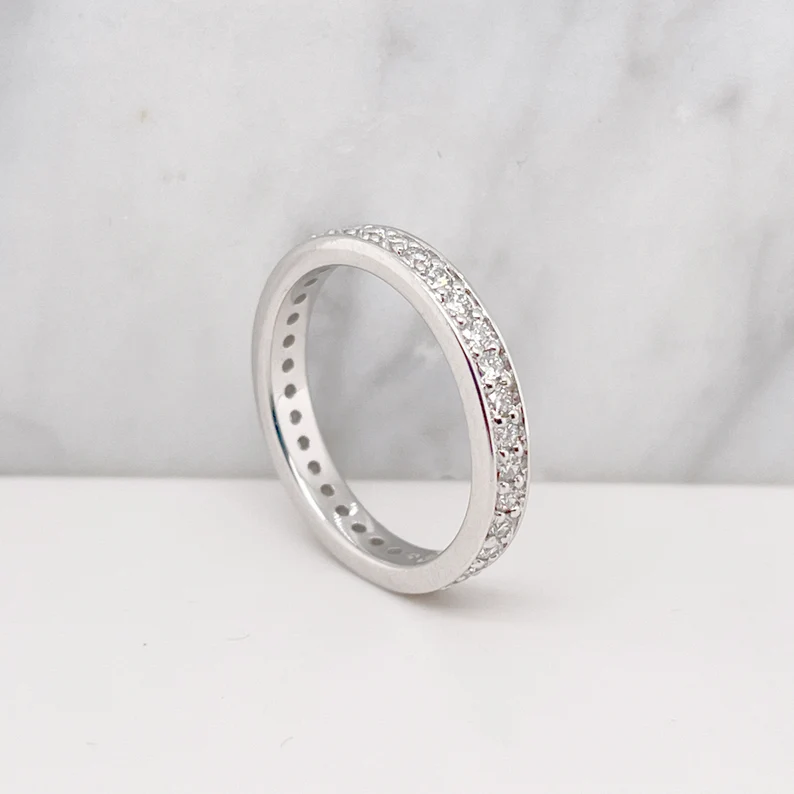
Why this matters: for delicate settings—shared-prong halos, knife-edge bands, or micro-pavé—platinum supports the design by holding metals around stones without rubbing them away as quickly. But repeated impact can flatten details just as it can with gold.
Stone settings and security
Platinum’s density and tendency to displace metal make it excellent for secure prong settings around diamonds. For example, a 1.00 ct round brilliant (≈6.5 mm diameter) set in a six-prong platinum head is less likely to experience prong thinning than the same design in 18k gold over the long term.
White gold is also strong, especially 14k, but it’s typically plated with rhodium to match platinum’s white color. That plating wears off over time and requires re-plating every few years—important to factor into long-term maintenance and to avoid mistaken assessment of “metal loss” when only plating has worn.
Color and finish
Yellow and rose goldWhite gold
Platinum
Allergies and skin sensitivity
Platinum is very inert and rarely causes allergic reactions. Nickel-containing white gold can cause contact dermatitis in sensitive people. If you or your partner has known metal sensitivities, choose platinum or confirm your white gold alloy is nickel-free (palladium-based).
Resizing, repairs, and long-term maintenance
Gold
Platinum
Cost and resale
Platinum typically costs more per gram than gold. Combined with its higher density, a platinum version of the same ring can be 25–50% more expensive depending on design, market prices, and local labor. Resale values depend on market conditions, brand, and diamonds—metal alone shouldn’t be the only investment consideration.
Practical buying checklist
- If budget is the top constraint: Choose 14k gold. It’s durable, less expensive, and holds polish well for daily wear.
- If you want a naturally white, low-allergy metal: Choose platinum or nickel-free palladium-based white gold.
- If the setting is ultra-fine (micro-pavé, knife-edge, tension): Prefer platinum for long-term prong security and reduced metal loss.
- If you want warm tones (yellow or rose): 18k gives richer color but requires more care; 14k is more durable.
- Maintenance planning: Budget for rhodium re-plating every 2–5 years with white gold; expect occasional re-tipping and professional checks for either metal.
Quick recommendations by scenario
- Everyday wearer with sensitive skin: Platinum or nickel-free white gold.
- Budget-conscious but wants durability: 14k yellow or white gold.
- Statement solitaire with thin claws: Platinum for long-term stability.
- Vintage-style or colored stones: 18k rose or yellow gold for warmth and authentic period look.
Bottom line: there’s no single “best” metal. Choose gold when you want specific colors, lower cost, and easier repairs. Choose platinum when you want natural white color, hypoallergenic metal, and a heavy, enduring feel—especially for thin, secure settings. Match the metal to the design, your skin, and your long-term maintenance comfort.