Blog
Matching Your Engagement Ring with Wedding Band


Choosing a wedding band that fits and looks right with your engagement ring is more than matching color. The two rings must sit comfortably together, protect each other from wear, and present a balanced look on the finger. I’ll walk you through the practical things to check — profile, metal, width, stone alignment, and maintenance — and give specific examples so you can make a confident choice.
Start with the ring profile: how they sit together
Look at the engagement ring’s cross-section before shopping. The profile tells you whether a straight band will sit flush, or if you need a contoured band. Common profiles:
- Flat/straight shank — a plain flat-sided shank (1.5–3.0 mm wide) will accept a straight wedding band. Why: flat surfaces meet evenly, so there is no gap.
- Curved or contoured shank — often on halo or cathedral settings. A straight band will leave a visible gap. Why: the engagement ring curves around the center stone and needs a matching curve.
- Knife-edge or tapered shank — these can leave small gaps. A contoured or tapered wedding band is usually required to avoid rocking.
- Comfort-fit inside — a rounded internal profile may change the perceived fit. If your engagement ring is comfort-fit, try comfort-fit wedding bands too for consistent feel.
Check ring height and head profile
Measure how high the center setting sits off the finger. Typical heights:
- Low-profile: ~2–3 mm — a slim band will sit close and look integrated.
- Standard: ~4–6 mm — many straight bands still work, but gaps may show.
- High setting: 7+ mm — a standard band rarely hides the gap; a contoured or custom “seat” band is best.
Why this matters: if the engagement ring sits high, a straight band will often bump against the setting rather than align under it, creating pressure points and risking stone loosening.
Match metal type, color, and composition
Matching metal color makes the pair look cohesive. Consider alloy specifics:
- 14k white gold ≈ 58.3% gold + other metals; needs rhodium plating to keep a bright white look. It’s harder and less costly than 18k.
- 18k white gold ≈ 75% gold; richer color, softer, wears faster.
- Platinum is typically 95% Pt alloy; naturally white, denser, more durable, and develops a patina over time.
- Yellow and rose gold depend on copper/silver mix; 14k is more durable for everyday wear.
Why alloy matters: different alloys wear at different rates. A platinum band will develop a patina and is harder to resize and solder with gold. If you want identical color over time, match alloy and karat or be prepared for re-plating on white gold.
Width and scale: aim for balanced proportions
Width is measured in millimeters (mm). Here are practical pairings:
- Engagement ring with a 2.5 mm shank: pair with a 1.5–2 mm wedding band for a subtle stack.
- Thicker engagement shank (3.5–4 mm): match with a 2.5–3.5 mm band for visual balance.
- Large center stone (e.g., 1.5–2.0 ct round, head ~6.5–7.5 mm): heavier bands (2.5–3.5 mm) look proportionate and provide stability.
Why: a very thin band next to a heavy engagement ring can look lost. Conversely, a wide band can overwhelm a delicate solitaire.
Setting types and stone alignment
Stone settings affect the band choice:
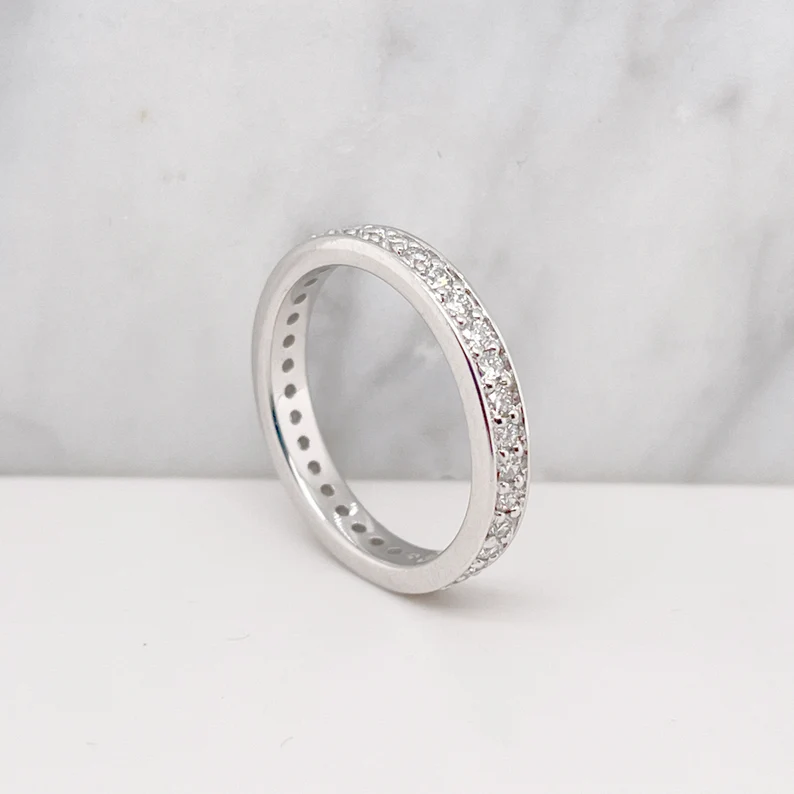
- Pavé or channel-set shanks — choose a pavé wedding band with matching stone size (diamonds about 1.0–1.5 mm for a delicate look). If the engagement ring has pavé along the top, the wedding band should line up. Why: misaligned stones look uneven and can catch on fabric.
- Bezel settings — bezel edges are wider. A slim, flush band or a contoured band with a slight channel works best to avoid an awkward gap.
- Tension settings — many tension rings are one-piece designs. A separate band usually won’t sit flush; look for a designer-made companion band or wear the engagement ring alone.
Practical fit and soldering concerns
Ask your jeweler about how the rings will be joined or adjusted:
- Soldering or welding — if you want the rings permanently attached, know the metals. Soldering platinum to gold requires special solder and a platinum jeweler. Why: different melting points and alloys require different techniques.
- Resizing — wide or stone-set bands are harder to resize. Confirm ring sizes after pairing, and account for thickness (comfort-fit rings can feel a half size smaller).
- Secure fit — for active lifestyles, consider a slightly thicker band (2.5–3.5 mm) and low-profile settings to reduce snagging.
Mixing metals: when contrast works
Mixing metals is a valid choice if done intentionally. Examples:
- Warm yellow gold solitaire with a slim white gold or platinum band for a modern contrast.
- Rose gold engagement ring with a matching rose gold band for a vintage feel.
Why it can work: contrast highlights design details and can make the center stone look whiter against a white band. But be aware of long-term color changes (white gold needs re-rhodium; rose gold retains color better).
Stacking multiple bands and engraving
If you want more than one wedding band, plan how many and their order. Thin bands (1–1.5 mm) stack cleanly. Place the wedding band closest to the knuckle if you want it to protect the engagement ring. Why: the outer ring takes the brunt of knocks and can prevent prong damage on a solitaire.
Maintenance and long-term care
Plan for upkeep:
- White gold: expect rhodium re-plating every 1–3 years depending on wear.
- Platinum: will develop a satin patina; polishing restores shine but removes metal over time.
- Stone-set bands: inspect prongs and channel settings twice a year to catch loose stones early.
Simple checklist before buying
- Measure engagement ring shank width and height in mm.
- Note metal and karat (14k vs 18k vs platinum) and match or plan maintenance accordingly.
- Decide on band width that balances the engagement ring (see examples above).
- Choose a contoured band when the engagement shank is curved or cathedral-style.
- Try rings together on the exact finger size; test for rocking and gaps.
- Confirm soldering/resizing options and costs before final purchase.
Choosing the right wedding band is a mix of geometry, metal science, and personal style. Measure, match, and try rings together. If in doubt, ask a jeweler to mock up a temporary seat or a 3D rendering — it saves time and money compared with later alterations.