Blog
The Return of Chokers in Fine Jewelry

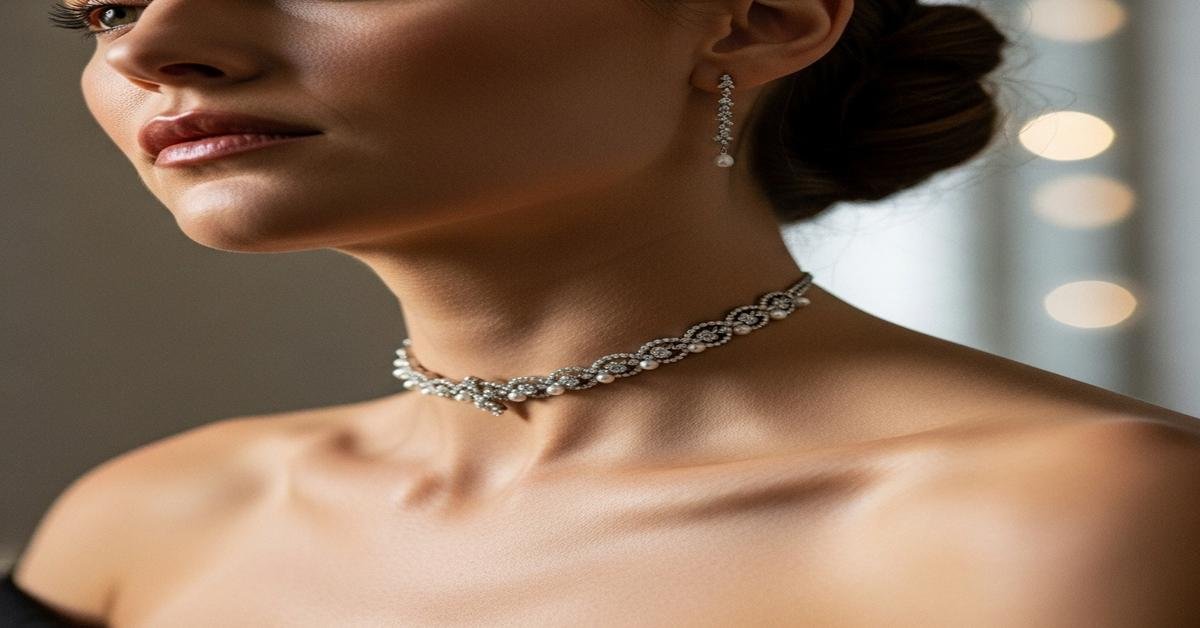
Chokers are back. But this time they’re not just 1990s nostalgia. Today’s fine-jewellery chokers combine precise fit, durable metals, and refined gem settings to make pieces that sit close to the neck and hold up every day. This article explains why chokers have returned, how to choose one that fits and lasts, and what to expect when buying or commissioning a fine choker.
Why chokers are re-emerging
Chokers return for two simple reasons: proportion and visibility. A necklace that sits at the base of the neck frames the face and collarbone. That works well in tight-lensed photography and modern minimalist wardrobes. Also, designers are revisiting early 20th-century and 1990s forms with contemporary construction—better alloys, precision settings, and adjustable fittings—so the pieces feel modern and wearable.
Common choker lengths and fit
Length matters because a choker must sit close without pinching. Industry practice:
- Choker: generally 13–15 inches (330–380 mm). A 14-inch (356 mm) choker is most common.
- Collar: a firmer, higher sit at about 12–14 inches (305–355 mm).
How to size: measure the neck circumference with a soft tape at the base of the neck. For a true choker, add about 5–10 mm (0.2–0.4 in) for a snug fit. For a slightly looser, more comfortable fit, add 15–25 mm (0.6–1.0 in). Example: if your neck measures 340 mm, choose 345–350 mm for a snug choker or 355–365 mm for a looser fit.
Materials, alloys, and durability
Choice of metal affects longevity and feel:
- 14k gold: ~58.3% gold + 41.7% alloy. It’s harder than 18k and better for daily wear. Good for chains and settings that will be handled often.
- 18k gold: ~75% gold. Softer, richer colour, preferred for high-jewellery surfaces and settings where deep polish is prized. Expect more wear over time.
- Platinum (Pt 950): typically 95% platinum. Heavier and highly durable. Holds prongs and settings well, which is why it’s common in diamond chokers.
- Sterling silver (925): 92.5% silver. Affordable but scratches and tarnishes faster; best for occasional wear.
White-gold pieces are usually rhodium plated. That plating wears off; expect re-plating every few years for everyday pieces.
Gemstones and settings: specifics that matter
How gems are set affects sparkle and security. Typical choices:
- Pavé: many small stones set closely. Melee diamonds are often 0.01–0.02 ct each. A pavé choker with 1–3 ct total weight gives continuous sparkle without a single dominant stone.
- Prong or shared-prong: used for larger stones. A center pendant in a choker often ranges 0.25–1.0 ct for balance; anything above 1 ct becomes visually large for the neck’s short distance from the face.
- Bezel/rub-over: metal wraps the gem edge. Less sparkle than prongs but more secure and cleaner for everyday wear.
- Pearls: classic choker material. Akoya pearls in the 7–8.5 mm range work well for close neck styles. Ensure silk threading with knots between pearls for durability.
Design examples and proportions
Concrete examples help you choose:
- Minimal chain choker: 14k yellow gold, 1.4–2.0 mm curb or cable chain, 14 inches, lobster clasp with 10 mm extender. Weight light; good everyday piece.
- Diamond line choker: platinum setting, 0.01–0.03 ct melee diamonds set continuously, total 2–4 ct, hidden box clasp with safety. Designed to sit flush and sparkle across the collarbone.
- Pearl choker: 7.5 mm Akoya pearls, knotted, 14 inches, small pearl toggle or gold clasp. Elegant and classic; best for occasional to moderate wear.
- Statement gemstone choker: bezel-set colored stones (e.g., sapphires 3–5 mm), 14–15 inches, 14k or 18k gold. Needs sturdy settings due to close contact with clothing and skin.
Clasps, closures, and micro-adjustment
Closures affect security and fit. Common types:
- Lobster and spring ring: standard for chains. Reliable and simple.
- Box clasp with safety: used in line chokers for a seamless look and extra security.
- Hidden or integrated clasp: gives a continuous visual effect. Look for a safety catch because close-fitting pieces can slip if unsecured.
Care, maintenance, and repair
Chokers sit close to skin and clothing. That increases contact wear. Practical care:
- Remove for swimming, showering, and sleeping. Chemicals and friction accelerate wear.
- For pearl chokers, restring every 1–2 years if worn often. Knots protect against loss if a string breaks.
- Re-tip or re-tension prongs on diamond chokers every 1–3 years at a trusted jeweller. Small prongs wear down and can release stones.
- Store flat or on a soft pad to prevent kinks in fine chains. Heavy pendants can distort sit and stress the clasp.
Price and sourcing expectations
Prices vary with metal weight, gemstone quality, and craftsmanship. Expect a wide range:
- A basic 14k gold chain choker (no gems) can start in the low hundreds to a few thousand dollars depending on thickness and maker.
- A diamond-set choker with 2–4 ct total weight in quality melee or small diamonds often costs several thousand to tens of thousands, depending on cut, colour and clarity.
Ask for documentation. For diamonds, request grading reports for stones above ~0.25–0.30 ct or a credible melee disclosure. For coloured gems, request treatment and origin disclosure if that matters to you.
Styling tips
Chokers work with many necklines because they sit high. Quick rules:
- Strapless and boatneck: chokers emphasize the neckline and make an elegant frame.
- V-necks and scoop necks: pair a choker with a longer pendant (16–18 in) for layered balance. Keep one piece dominant.
- Casual tees: a thin gold choker or pearl choker adds polish without overpowering the outfit.
Commissioning a custom choker
If you’re commissioning, specify these points to the maker:
- Exact finished length in mm and whether you want an extender.
- Metal and its fineness (e.g., 14k = 58.3% gold; 18k = 75% gold; Pt950 = 95% platinum).
- Stone sizes and total carat weight (e.g., 24 x 0.02 ct melee = 0.48 ct total).
- Clasp type and where it sits when worn.
Clear specs avoid surprises and ensure the choker fits both physically and visually.
Chokers are not a fad if built well. Choose the right length, metal and setting for how you’ll wear it. That is the difference between a costume throwback and a piece you’ll reach for every season.