Blog
Why Butterfly Jewelry Is the Next Big Trend

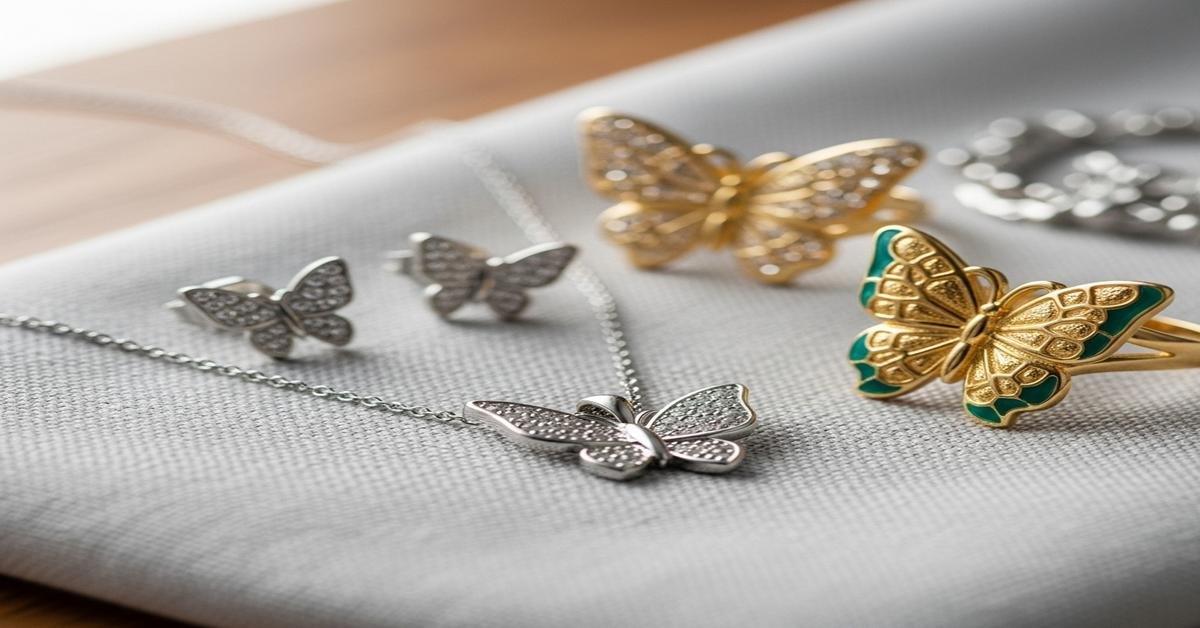
Butterfly jewelry is moving from seasonal novelty to mainstream wardrobe staple. Designers are using the motif in fresh ways that suit current tastes: small and personal, or bold and sculptural. The reason it’s catching on now comes down to symbolism, technical capability, and clear shopper demand for pieces that feel both meaningful and wearable.
Why the butterfly motif resonates today
Butterflies carry straightforward symbolism: transformation, freedom, and renewal. Those ideas connect with shoppers after a period of social upheaval and lifestyle change. People want jewelry that tells a story without needing explanation. That’s why a small butterfly pendant or stud works: it reads as personal meaning rather than loud luxury.
Design-wise, the motif is versatile. A butterfly silhouette adapts easily to different finishes, sizes, and materials. It can be executed as a 10 mm delicate stud with a single 0.10 ct center stone, or as a sculptural brooch 45–60 mm across with multiple gemstones totaling 3–5 cts. Versatility equals broader market appeal.
Design directions: tiny minimal to high-jewelry
There are clear categories emerging in the market:
- Micro and minimalist: studs and thin-chain pendants, 6–12 mm wide, often in 14k gold or sterling silver. Stones are small—melee diamonds 0.005–0.02 ct each—or a single 0.05–0.25 ct sapphire or tsavorite for a pop of color.
- Mid-range fashion: layered necklaces, charm bracelets, and stackable rings. Pendant sizes range 18–30 mm. Materials include 14k gold-filled or vermeil with enamel accents. Decorative techniques like micro-pavé (0.01–0.02 ct melee diamonds) and hand-applied enamel broaden the palette.
- Designer and high jewelry: three-dimensional butterflies in 18k gold or platinum. Wing construction uses layering and negative space, often set with mixed stones: sapphires, Paraíba tourmaline, and diamonds totaling 2–6 cts. Kinetic pieces add movement with hinged wings or suspended elements.
Materials and technical details that matter
Choice of metal and manufacturing technique changes both look and durability. Here’s what to look for and why:
- Alloy composition: 14k gold (58.3% gold) balances cost and strength for everyday wear. 18k (75% gold) has a richer tone but scratches more easily. Sterling silver (.925) is affordable but requires more polishing. Vermeil (gold over sterling) offers gold look at lower cost but plating can wear.
- Plating and finishes: Rhodium plating on white gold or silver prevents dulling. Expect rhodium to wear off in high-contact areas after 6–24 months. Brushed or satin finishes hide scratches better than high polish.
- Stone specifics: Melee diamonds typically range 0.001–0.02 ct. A butterfly pendant with 0.30 ct total weight usually uses many melee stones in pavé. Colored stones—sapphires, tourmalines, tsavorites—work well in calibrated sizes (2–4 mm) that follow wing curves.
- Manufacturing: CAD/CAM and 3D printing allow delicate wing lattices impossible with traditional casting. Laser welding and micro-setting keep elements secure while maintaining lightness. For kinetic pieces, precision hinge tolerances and spring steels are essential to avoid failure.
Styling and proportions
Proportion is key. Small pieces read as everyday and subtle. Larger pieces become statement and seasonal.
- Studs: 6–10 mm. Perfect for multiple piercings. Example: 14k yellow gold 8 mm butterfly stud with a 0.10 ct sapphire center and 4 melee diamonds (0.02 ct total).
- Pendants: 18–30 mm on 16–18 inch chains for necklines. Example: 14k white gold 20 mm pendant with micro-pavé diamonds totaling 0.25 ct and blue enamel wing accents.
- Brooches: 40–60 mm. Use for outerwear or as hair accessories. Heavier construction often needs backing reinforcement to keep the pin from drooping.
Why manufacturers and retailers are backing the trend
There are practical business reasons butterflies are becoming ubiquitous:
- Ease of SKU expansion: The motif translates to many product types—rings, bracelets, necklaces—allowing brands to create capsule collections quickly.
- Cost flexibility: A motif suits both low-price silver items and high-ticket gold and diamond pieces. That spreads inventory risk across price points.
- Personalization opportunities: Engraving, birthstone centers, and color enamel let retailers offer customization with small margins on extras.
Care and longevity—what buyers should know
Butterfly jewelry often has small parts and delicate finishes. Proper care extends life:
- Avoid wearing delicate pieces with thin wings during heavy activity. Hinged or layered wings can snag.
- Clean gold and diamonds with warm water and mild soap. Use a soft brush for pavé settings. Avoid ultrasonic cleaners for pieces with glue-set stones or fragile enamel.
- Rhodium plating and enamel will wear. Expect replating or touch-up within 1–3 years for frequently worn white gold or vermeil pieces.
- Store three-dimensional brooches flat to prevent bending of pins or thin metalwork.
Price expectations and buying tips
Price varies by material and craftsmanship:
- Sterling silver and base-metal fashion pieces: $40–$200. Good for trend-driven shoppers who change styles often.
- 14k solid gold with small diamonds or sapphires: $400–$2,000 depending on weight and total carat weight (0.10–0.50 ct typical for small pendants and studs).
- 18k gold or platinum high-jewelry butterflies with mixed gemstones and 2–6 cts total: $4,000–$50,000+, depending on stones and maker.
When buying, check the construction. Solid backs, secure prongs, and even symmetry in wing shaping indicate better build quality. For kinetic pieces, ask about hinge testing and warranty.
Final take
Butterfly jewelry is poised to grow because it meets emotional, design, and commercial needs at once. It’s meaningful without being preachy. It adapts to small, everyday formats and to high-jewelry expression. Advances in manufacturing make delicate, realistic wings possible while keeping pieces durable. For buyers and retailers alike, that combination—symbolism, adaptability, and technical refinement—is what turns a pretty motif into the next big trend.